
Bergas Brillianto assesses the viability of an increasingly well-trodden path, that from J1 League to Europe’s elite, and speaks to players and sporting directors to understand what is happening and why
Tomoya Ando finally made his starting debut in the Bundesliga. He started when St. Pauli faced RB Leipzig on the last Tuesday of January.
It was a huge moment for the 27-year-old centre-back, who moved to St. Pauli directly from J1 League club Avispa Fukuoka this winter: a player with no experience of European football at all made his Bundesliga debut.
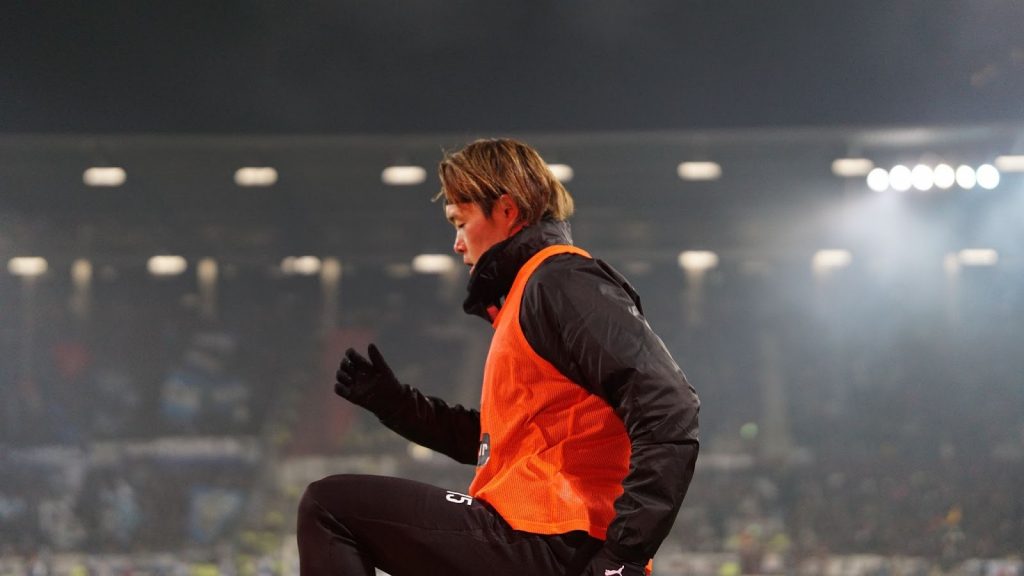
Ando played well in that game. He looked shaky at the start, but became more composed as the game progressed.
He finished the game with four tackles, four clearances and two recoveries, winning four out of five aerial duels. In terms of distribution, he also showed courage, managing to send ten passes into the final third with a passing success rate of 76%.
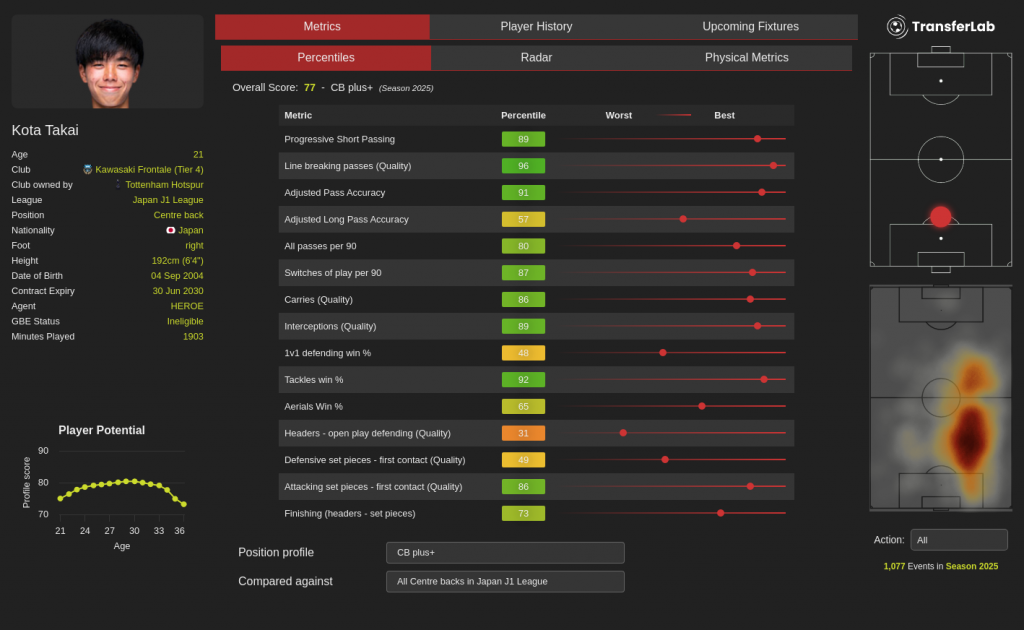
The previous weekend, Kota Takai also made his starting debut in European football. Last summer, Tottenham Hotspur reportedly paid a record fee of £5 million to buy him directly from J1 League club Kawasaki Frontale, where he showed elite levels of passing, tackle win percentage, and was also a good threat at set pieces.
However, he made his first start in a top European league not with Spurs in the Premier League, but with Borussia Mönchengladbach in the Bundesliga.
After suffering an early-season setback, Takai did not make an appearance for Spurs before they loaned the 21-year-old to Gladbach when the winter transfer window opened. After playing for 18, 45 and two minutes in three games, he finally started in the game against VfB Stuttgart, replacing the injured Kevin Diks.
Although the game ended in defeat for Gladbach, losing 0–3, Takai played quite comfortably in his role as ball-playing defender: he completed 90% of his passes, made 50% of his long balls accurately, made seven clearances and five recoveries, and won three out of four duels.
The story of these two players is really interesting because they moved directly from the Japanese league to a top European league, unlike many of their compatriots who usually opt for a ‘transit’ in a lower-ranked league such as the Eredivisie or the Jupiler League, or through a lower division.
While this is not new, as the Bundesliga has had players from Japan who moved directly from Japan for decades, recent seasons show that the trend is continuing positively, with various clubs doing the same.
It is fair to say that the Bundesliga and Japanese players have enjoyed a great relationship for decades, with many success stories. From Yasuhiko Okudera in the 1970s to well-known players such as Shinji Kagawa, Makoto Hasebe, Wataru Endo, and Daichi Kamada, the Bundesliga has always been a popular destination for Japanese players.
This season alone, there are 14 Japanese players in the Bundesliga. Interestingly, five of them moved directly from Japan without playing in a lower-ranked league or division first.
Aside from Takai and Ando, Bayern München‘s Hiroki Ito was the first in this group to take the unusual path, moving from Jubilo Iwata to VfB Stuttgart in 2022.
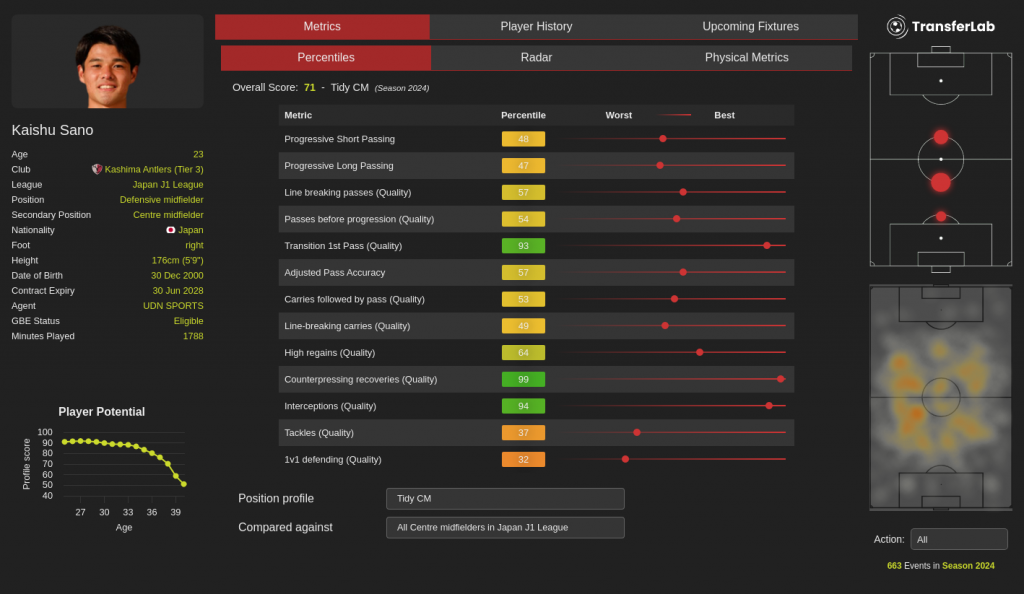
The other two are Mainz players Kaishu Sano and Sota Kawasaki. Sano, who excels in transitional teams, joined last season from Kashima Antlers and has become an influential player for Mainz, while Kawasaki is currently on loan from Kyoto Sanga.
Notably, just a day after Ando’s debut, St. Pauli reportedly agreed to sign another J1 League player, Taichi Hara.
The 26-year-old forward has also played for Kyoto Sanga before, but already has European experience with Croatian club Istra 1961, Spanish club Deportivo Alavés, and Belgian club Sint-Truiden on his CV.
Nevertheless, it is interesting to observe the trend of signing players directly from the Japanese league to the top European leagues, and to consider the reasons why it continues.
Borussia Mönchengladbach‘s case: Developing a Pathway From Japan
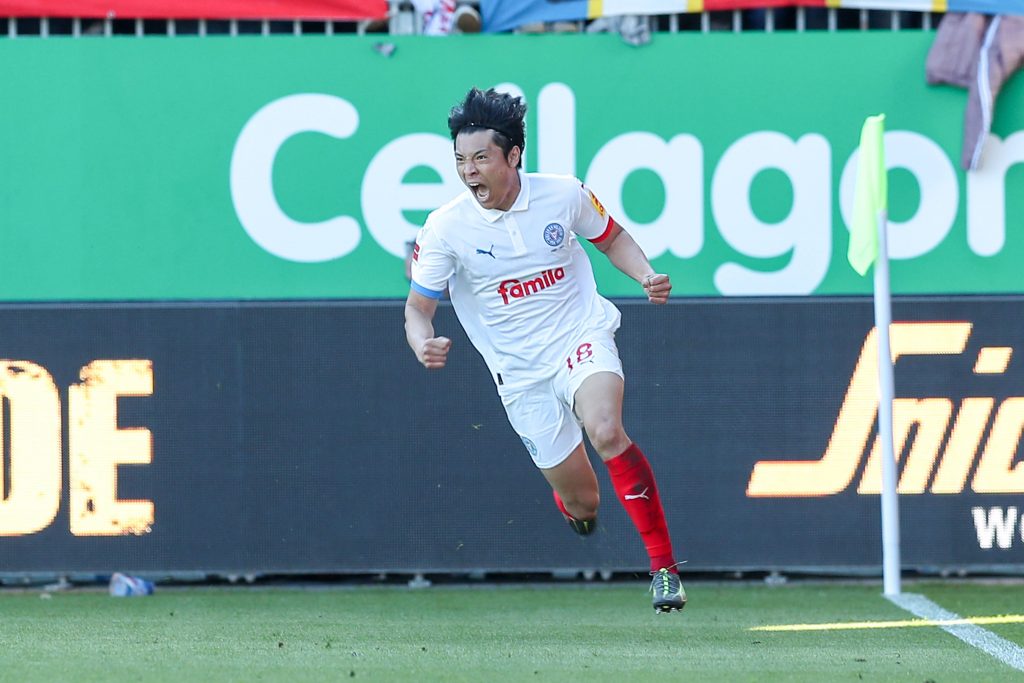
Borussia Mönchengladbach is one of the interesting teams to observe in this regard. This season, aside from Takai, Gladbach have another Japanese player on their squad in Shuto Machino (pictured in the main image).
Machino also moved directly from Japan to Germany, but it was to 2. Bundesliga club, Holstein Kiel. He was successful there, being one of the historical promotion heroes, before Gladbach signed him last summer.
Gladbach technically also have another Japanese player in Shio Fukuda, who moved directly from Kamimura Gakuen High School back in 2023 to their youth team, but currently on loan to second division club Karlsruher FC.
Gladbach have clearly scaled up their interest in Japanese players based on the historic success of such players in their colours, and in the league as a whole.
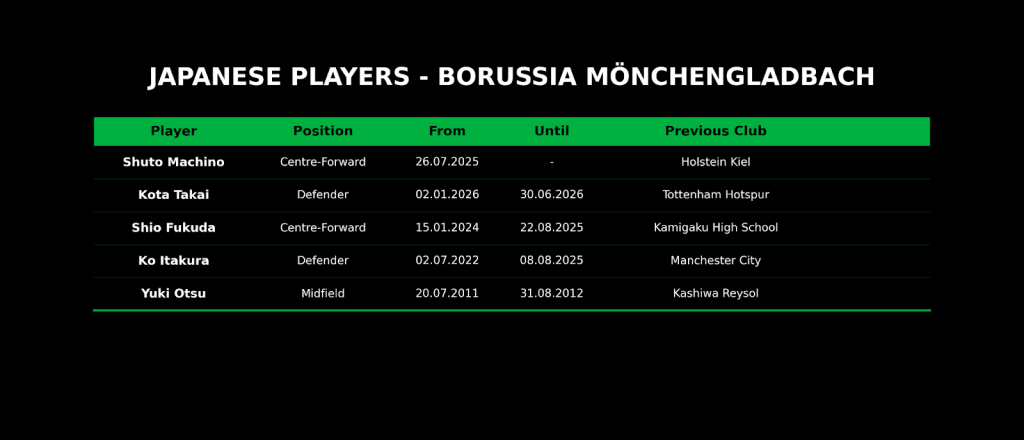
For context, Gladbach signed Itakura for just €5 million back in 2022 and sold him at double the price last summer to Ajax. During his time in the club, Itakura also became a key player for Gladbach.
And indeed by signing Japanese players with a cheaper price directly from Japan, there is a increased possibility of gaining more profit if the player is successful.
When speaking to me exclusively, Borussia Mönchengladbach‘s Sporting Director Rouven Schröder told me they are very open to the idea of signings another Japanese player, although despite the possible financial upsides, the sporting side is very much the driver.
“The history of Japanese players [to the Bundesliga], I think, it‘s so important because it‘s getting better and better. And everyone is so positive, good players, strong players, quality players,“ Schröder started.
“[They are] fast, good technique, presence together as a team, and then they have the result. You will see maybe in the next few years, Japanese guys will come [to Gladbach] for sure,“ he added.
Schröder seems quite happy with the Japanese players in the squad. Although Takai is on loan, his debut as a starter showed that he is important for Gladbach’s defensive depth for the rest of the season, and he has the chance to become a regular starter.
Meanwhile, although he does not start every game, Machino has played in 18 Bundesliga matches, spending 732 minutes on the pitch and scoring three goals. Only the main striker, Haris Tabakovic, has scored more.
This situation is a good sign for Gladbach to have more faith in Japanese players, especially rookies, and this could strengthen if Fukuda returns from loan ready to play at Bundesliga level.
Schröder told me that he and his recruitment team are preparing a special approach to recruit players directly from the Japanese league: using the German connection.
“I‘m so positive [with the plan to sign other Japanese players] because I have so many friends in Japan [to help], like Roger Schmidt. I think he‘s now there and also [there‘s a] coach from Germany,“ he said.
Former Bayer Leverkusen and Benfica coach Roger Schmidt currently works as a J.League global football advisor, while former Eintracht Frankfurt and Leverkusen coach Michael Skibbe will lead Vissel Kobe in the next J1 League.
Schröder believes that having a strategic representative from Germany there would be beneficial for him and his team, as well as for other German clubs, when it comes to scouting and acquiring Japanese players directly from their country of origin.
For context, Schmidt’s appointment aims to bring the J.League closer to European leagues in terms of philosophies and coaching methods. This will also benefit European clubs who want to recruit players directly from Japan, and vice versa.
J.League’s Ecosystem Development and Recent Tactical Trends Help Players Transition to Europe
What Schröder said also aligned with the views of Ryo Nakagawara, a Japanese football expert from Shogun Soccer: the development and globalisation of Japanese football and its leagues makes it easier for players to move directly to Europe’s major leagues.
“Given the depth and breadth of the Japanese football ecosystem that has become quite developed over the past few decades, the amount of Japanese players at high levels in the game makes sense,“ Nakagawara told me.
“The ecosystem works to bring together a lot of different stakeholders from the J.League, amateur teams, even local high schools/universities, grassroots, etc. to create a very large pool of players with a high technical floor,“ he added.
This, coupled with advances in data scouting and the strong track record of Japanese players in Europe, has increased the value and credibility of Japanese players in the eyes of the major European leagues.
Thanks to the improved ecosystem of Japanese football, it is now possible for some European clubs to sign players directly from high school, as Gladbach did with Shio Fukuda.
“They [European clubs] are able to approach from an advantageous position by being able to offer these young players potential playing time as well as a significant salary increase compared to J.League clubs,“ Nakagawara explained.
Another factor that makes players more attractive to top-league clubs like those in the Bundesliga is the development of the J.League itself, particularly from a tactical perspective.
As Analytics FC previously wrote, the J1 League has become more direct in recent years, a point also made by Ryo.
“The league has always been known for its technicality but in recent years there have been teams that have become more direct and physical instead, which creates a good varied environment for players as they can experience different styles of play,“ Nakagawara said.
“With European leagues becoming increasingly physical, faster, yet needing technical players to keep possession, this makes the J.League a logical hunting ground as it offers similar characteristics to various European leagues,“ he added.
The ability to play a direct game is indeed beneficial for teams such as Gladbach, St. Pauli, and Mainz, who intend to play in this way.
For context, St. Pauli and Gladbach are among the top eight teams in the Bundesliga this season for releasing direct attacks, while Mainz, on average, have the second-fastest attacking sequence in the league.
Therefore, theoretically, moving from generally direct leagues to direct teams would help players settle into their new teams faster.
The Player’s Perspective: Straight to the Elite Now Makes More Sense
Kaishu Sano is a good example of how a player can settle directly in the Bundesliga by choosing the right club. He became a starter for the direct Mainz from the first game last season and has continued to do so until now.
While Ando and Takai also made their starting debut in the same month as their signing, this was due to different circumstances: Ando’s teammate was suspended and Takai replaced an injured player.
This doesn’t mean that they lack the quality to be a starter for a Bundesliga team. It’s just that they are not fully ready to become starters for various reasons.
In Ando’s case, for example, his lack of fluency in English and German has been an obstacle. However, following his successful debut, it seems that Ando can overcome this flaw and his coach, Alexander Blessin, may well trust him to start again.
Players who move directly from Japan to top European leagues like the Bundesliga need to be well-rounded, both on and off the pitch. That’s why it’s such a great challenge, and if you fail, you fail.
This situation causes some players to prefer the old way: transiting through a lower-rank league or division first to help them adapt to European football more easily.
At least, that’s the advice I received from Joel Chima Fujita, a Japanese national team player who currently plays for St. Pauli in the Bundesliga.
“I think in the Bundesliga, the level it‘s much higher than the Japanese League. It‘s more physical and Japanese players are more speedy, and also technical. But for me that was not so hard [to adapt], because I was playing in the Belgium league for two years before I came here,“ Fujita said.

Prior to moving to Germany, Fujita spent two seasons with Sint-Truiden in Belgium. There, he gained experience and raised his game. Consequently, when he moved to St. Pauli last summer, he was able to secure a place in the starting lineup immediately, becoming one of their key players.
His journey is similar to that of Liverpool’s Wataru Endo, who also played for Sint-Truiden before moving to the Bundesliga and becoming a key player there. There are also some other notable Japanese players in the top European leagues right now who chose the same path.
Of course, every player has their own experience, so it’s difficult to generalise, especially given that the gap between the J1 League and the top European leagues is closing.
Some players no longer need to transition, especially if there is another Japanese player in their new team who can help them adapt more easily. For example, Ando has Fujita as his teammate at St. Pauli, as does Takai with Machino.
Club size also matters. It is indeed harder to compete for a place in the starting line-up at big clubs such as Bayern München than at medium or bottom-half clubs. This also helps.
In general, Japanese players now have more options: They are now valuable targets for clubs in the top European top leagues, so there is a greater chance of moving there directly than before. Otherwise, if they feel they need more time to adapt, there is a proven track record of success for those who transit first.
So, let’s see where this trend is going, as it would benefit players, Japanese football and the clubs in the top European leagues.
Header image copyright IMAGO / Jan Huebner